


27 novembro, 2017
 |
| Photo: Beto Barata/PR |
A new version of Brazil’s unpopular Pension Reform bill
presented last Wednesday will suggest “softer” rules for retirement and social
security contributions, according to a draft of the legislation that the Government
hopes will win approval in Congress.
The new bill will require a minimum of 15 years of
contributions from private sector workers, compared to 25 years in the previous
draft bill and 15 currently. Public servants would have a 25-year minimum, and
all workers would need to work 40 years to retire on full pension.
The
bill maintains the minimum retirement age of 65 years for men and 62 years for
women, a key proposal for reducing the cost of Brazil’s pension system.
Pension
reform is the cornerstone policy in President Michel Temer’s efforts to bring
the deficit under control, but he lacked the votes to get a tougher version
approved by lawmakers who worried the unpopular measures would hurt their
re-election chances next year.
Temer used political capital blocking corruption charges
that further undermined support for his policies and delayed a pension reform
vote in Congress by six months.
The
revamped bill maintains the same retirement rules for rural workers that are in
effect now, dropping proposals for tighter standards.
In
the current bill, rural workers will contribute for 15 years to get a pension,
10 years less than the Government’s initial proposal. The minimum retirement
age for female and male rural workers will be kept respectively at 55 and 60
years, the same as today, according to the draft.
The Government
restored a guarantee that disabled or elderly people unable to support
themselves would receive an additional amount so their total payment meets a
monthly minimum,
The
speaker of the Lower House of Congress, Rodrigo Maia, warned this week said
that the government did not have the 2/3 majority of votes needed to pass a Pension
Reform.
Maia
said the government should work to strengthen its base first, which Temer
sought to do on Wednesday by swearing in Alexandre Baldy to head the Ministry
of Cities, a move designed to please the Baldy’s Progressive Party (right
wing), which has 40 seats in the chamber.
Source:
Mercopress Agency
23 setembro, 2017
 |
| Photo: Marcelo Camargo - Agência Brasil |
Brazil’s Central Bank trimmed its inflation forecast on
Thursday and said it expected economic growth to pick up into next year,
painting an optimistic picture for Latin America’s largest economy as interest
rates approach record lows.
In a quarterly inflation report, the Central Bank
forecast economic growth of 0.75% in 2017, up from a previous estimate of 0.5%.
For 2018, the Bank forecast growth of 2.2%. Inflation is estimated at 3.2% in
2017 and 4.3% in 2018, down from 3.3% and 4.4% respectively that it expected
previously.
The Central Bank, which has slashed interest rates from
14.25% to 8.25% over the past year to revive a recession-hit economy,
maintained its forecast of gradually reducing the pace of interest rate cuts in
coming months.
The Bank extended its inflation scenario to include
forecasts for 2019 and 2020, at 4.2% and 4.1% respectively. With inflation
estimates hovering around the official target of 4% for 2020, policymakers said
monetary policy can continue to stimulate economic growth.
Economists expect the bank to cut its benchmark interest
Selic rate to 7.00 percent by December, below an all-time low of 7.25%t, and
keep the rate at that level through 2018, a weekly central bank survey showed
on Monday.
Brazil’s economy resumed growth in the first half of this
year after 3 years of its worst recession on record. While stronger consumption
has driven the gradual recovery for now, investments are expected to grow 3% in
2018 thanks to lower interest rates, the bank predicted.
Temer Presidency: deep disapproval among Brazilians
Nevertheless, approval for Brazilian President Michel
Temer's government has plummeted, according to a poll published on Tuesday, as
the scandal-plagued leader faces new corruption charges and struggles to push
his economic reform agenda through Congress.
Polling firm MDA said that only 3.4% of those surveyed
thought the Temer government was doing a “great or good” job - down from 10.3%
in MDA's last such poll in February.
Temer took over a year ago from impeached leftist Dilma
Rousseff and has said he does not care about popularity and only wants to push
through an austerity package before his term ends in Jan. 2019. Yet his ability
to do so has been hamstrung by charges of taking bribes, racketeering and
obstruction of justice.
The charges against Temer are based on the plea-bargain
testimony of the owners of the world's largest meatpacker, JBS SA. They
accuse Temer of taking bribes in return for political favors and of conspiring
to buy the silence of a witness who could implicate the leader. Temer has
repeatedly denied any wrongdoing.
The
MDA poll was commissioned by the national transport lobby CNT and surveyed
2,002 people across Brazil from Sept. 13-16. The poll has a margin of error of
2.2 percentage points.
Source:
Mercopress Agency
14 setembro, 2017

Segundo
fontes, o Procurador-Geral da República, Rodrigo Janot, já teria
concluído nova denúncia contra Michel Temer. O Presidente será
acusado dos crimes de organização criminosa e obstrução de
Justiça em documento com 200 páginas a ser apresentado até o fim
da tarde desta 5ª feira (14/09) ao Supremo Tribunal Federal (STF).
A
denúncia tem como base as delações de executivos da JBS e do
corretor de valores Lúcio Funaro, considerado operador do PMDB nos
esquemas de corrupção. Essa é a segunda denúncia a ser oferecida
por Janot contra o Presidente. A anterior, por corrupção, feita a
partir das delações de executivos da J&F, foi rejeitada pelos
aliados de Temer na Câmara.
Temer
será denunciado por obstrução da Justiça por ter avalizado, no
entendimento de Janot, o empresário Joesley Batista a comprar o
silêncio de Funaro e do ex-Deputado cassado Eduardo Cunha (PMDB-RJ).
Já o crime de organização criminosa será atribuído ao Presidente
por sua atuação no chamado “quadrilhão” do PMDB na Câmara.
Temer
nega todas as acusações e alega sofrer perseguição política de
Janot. Ontem o Supremo rejeitou, por unanimidade, o pedido de
suspeição do Procurador-Geral da República apresentado pela defesa
do Presidente.
Confirmado
o oferecimento da denúncia, caberá à Câmara analisar o pedido da
Procuradoria-Geral da República para autorizar o STF a julgar a
acusação. Se não houver o apoio de pelo menos 342 deputados, o
processo será suspenso até que Temer deixe a Presidência. Janot
deixa a PGR na próxima segunda-feira, quando passará o cargo a
Raquel Dodge.
Negado
pedido da defesa de Geddel para que ex-ministro retorne a prisão
domiciliar
A Justiça
do Distrito Federal negou hoje pedido da defesa do ex-ministro Geddel
Vieira Lima para que ele deixe o presídio da Papuda e passe para a
prisão domiciliar ou, como segunda alternativa, para a prisão
militar. Na decisão, a a juíza Lelia Cury, da Vara de Execuções
Penais, afirmou que Geddel não corre riscos na cadeia e que a
reportagem anexada ao pedido é “meramente especulativa”.
Quanto a
possibilidade de Geddel migrar para a prisão militar, a magistrada
lembra que o benefício só é concedido a advogados, agente político
do Estado e militares enquanto ainda integram a referida força. Na
decisão, ela ressalta não ser o caso de Geddel.
Lelia
Cury nega ainda o pedido da defesa para que o processo corra em
segredo de Justiça. “A publicidade do presente feito se faz
necessária para demonstrar que ao custodiado vem sendo dispensado o
mesmo tratamento dado aos demais presos do DF que ostentam as mesmas
condições pessoais e processuais”, diz a juíza em uma das
justificativas.
Geddel
foi preso na última 6ª feira (08/09), dois dias após a Polícia
Federal localizar um apartamento com R$ 51 milhões, distribuídos em
malas e caixas, que havia sido emprestado por um empresário ao
ex-ministro. Essa foi a maior apreensão de dinheiro vivo na história
do país. Foram identificadas impressões digitais do peemedebista em
cédulas apreendidas no “bunker”.
Geddel já
havia sido preso em 4 de julho, acusado de tentativa de obstrução
de Justiça em meio às ações da Operação Cui
Bono.
Uma semana depois, por meio de habeas
corpus
concedido pelo Tribunal Regional Federal (TRF) da 1ª Região, passou
para a prisão domiciliar.
Geddel
também é suspeito de ter recebido cerca de R$ 20 milhões em
propina de empresas em troca da liberação de financiamentos na
Caixa Econômica Federal (CEF). Ele foi vice-presidente de Pessoa
Jurídica do banco estatal entre 2011 e 2013, no Governo da
ex-Presidenta Dilma Rousseff.
Fontes:
Folha de S. Paulo, Congresso em Foco
16 agosto, 2017
 |
| Photo: Ueslei Marcelino/Reuters |
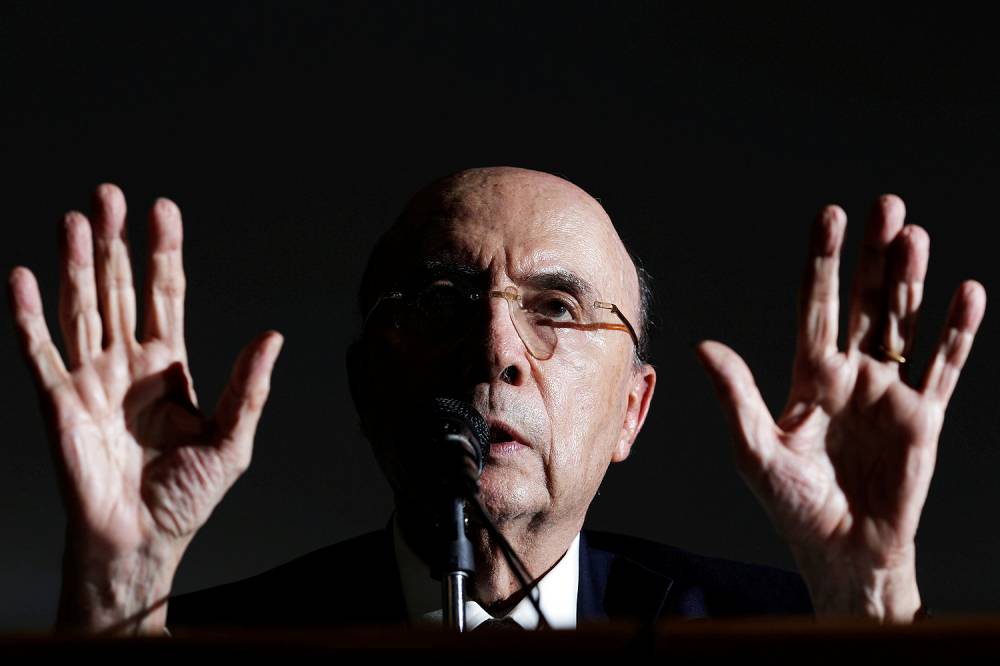
Brazil's government relaxed its budget targets until 2020 this Tuesday, delaying prospects for a drop in the federal deficit after legislators repeatedly refused to raise taxes in the recession-hit economy.
Cost-cutting measures were announced along with the new targets, in a bid to demonstrate President Michel Temer's commitment to fiscal discipline even after his economic team cut forecasts for economic growth next year.
The revision, announced weeks earlier than expected, underscored the uphill battle for Temer to gather support for austerity measures as a corruption scandal simmers and next year's general elections approach.
Market reaction was muted as investors did not expect a surge in government spending despite the new targets. Ratings agency Standard & Poor's spared Brazil from a downgrade, saying after the announcement that it would maintain the country's debt rating at BB with a negative outlook.
Brazil's government set a new primary deficit target for this year and next of R$ 159 billion ($49.7 billion), up from R$ 139 billion this year and R$ 129 billion for 2018.
The country will target a deficit of R$ 139 billion for 2019, up from R$ 65 billion previously. For 2020, it will aim for a R$ 65 billion deficit compared with a R$ 10 billion surplus previously - raising prospects of a seven-year-long period of consecutive budget deficits, started in 2014.
Members of Temer's economic team, including Finance Minister Henrique Meirelles, previously wanted to wait until September to consider a looser budget target, but agreed to move up talks under pressure from a fractious coalition in Congress.
Most cost-cutting measures announced by Meirelles and Planning Minister Dyogo Oliveira this Tuesday will need Congress' approval. They include postponing public sector salary hikes by one year and reducing the entry salary for incoming civil servants.
Despite strong opposition to tax hikes, Meirelles said the government would still seek to roll back payroll tax breaks and would raise taxes on some investment funds.
The government did not announce expected infrastructure concessions. It forecast 2% growth in 2018, down from a previous estimate of 2.5%.
Congress leader says Brazil Government doesn't have votes to pass social security reform
The Speaker of Brazil's Lower House said Tuesday the government doesn't have the votes to pass a social security overhaul that is key to President Michel Temer's economic agenda.
The comments by Chamber of Deputies Speaker Rodrigo Maia came after a meeting with Finance Minister Henrique Meirelles as well as the leaders of the parties in congress.
"It would have been ideal to approve the reform today," Maia said, arguing that it was the only straightforward solution to the country's economic crisis.
The government would need 308 votes to pass the constitutional amendment in the 513-member Lower House.
Temer, whose approval rating was 5% in the latest national poll, has been counting on his proposals for loosening work rules and changing pensions to revive the economy and help save his Presidency. Failure to pass them could undermine crucial support for him and could leave him vulnerable to a second round of corruption charges.
The pension overhaul is less appealing to congressmen looking ahead to the 2018 general elections.
The Chamber of Deputies recently voted against sending Temer to trial on a bribery charge. However, the mounting pressure on the President weakened his governing coalition in the lead-up to that vote and has put the brakes on his economic agenda.
Temer could also face new accusations in the near future.
The Chamber of Deputies recently voted against sending Temer to trial on a bribery charge. However, the mounting pressure on the President weakened his governing coalition in the lead-up to that vote and has put the brakes on his economic agenda.
Attorney General Rodrigo Janot, who filed the bribery charge against the President, said last week that plea bargains being negotiated could lead to new charges against Temer. Janot's term as Brazil's top lawman ends September 17th, meaning his time is running short to deliver on his warning.
Sources: Reuters, Agência Brasil
01 agosto, 2017

Líderes
da oposição se reunirão no início da tarde de hoje para tentar
desenhar estratégia conjunta para a votação da denúncia contra o
Presidente Michel Temer (PMDB) prevista para esta 4ª feira (02/08).
Os oposicionistas ainda estão divididos: um grupo defende que não
se registre voto para forçar o adiamento da decisão por falta de
quórum; outro quer votar logo a denúncia para expor publicamente os
parlamentares governistas. A votação só poderá ser iniciada se
342 deputados estiverem presentes em Plenário da Câmara.
A
primeira posição é defendida, sobretudo, por parlamentares do PSOL
e da REDE. A segunda é apoiada por parte das bancadas do PT, do PDT,
do PSB e do PCdoB. As duas primeiras legendas entendem que protelar a
decisão é a melhor saída: empurrando-se o caso, acreditam,
cresceria pressão sobre os Deputados governistas e o próprio
Presidente. Nesse intervalo, o Procurador-Geral da República poderia
apresentar nova denúncia contra Temer.
Para os
demais partidos da oposição (encabeçados por setores do PT), seria
melhor votar logo o pedido para aumentar o desgaste da base aliada,
com a divulgação dos votos de cada Deputado, de modo a abrir
terreno para a votação da próxima denúncia. A Procuradoria-Geral
da República, que denunciou Temer por corrupção passiva, estuda
apresentar novo pedido de ação penal contra o presidente por
obstrução da Justiça e organização criminosa com base nas
delações da JBS.
No
entanto, há um consenso: os oposicionistas desejam prolongar o
debate. O objetivo é que a discussão se arraste até a noite para
ser transmitida em horário nobre e ao vivo pelas redes de TV. Para
isso, uma das estratégias será apresentar questões de ordem. A
sessão no plenário da Câmara está prevista para começar às 9h
da manhã de amanhã.
Já os
governistas defendem votação imediata da denúncia para tentar
reduzir a carga contra Temer. Eles alegam que têm mais que os 172
necessários para salvar o peemedebista.
Reportagem
publicada no site da revista Época nesta terça-feira informa que o
então Vice-Presidente Michel Temer autorizou o lobista da JBS,
Ricardo Saud, a entregar R$ 3 milhões em dinheiro vivo ao agora
ex-deputado Eduardo Cunha (PMDB-RJ). Na ocasião os dois
peemedebistas eram aliados. Segundo a revista, o valor foi descontado
dos R$ 15 milhões que Temer receberia da empresa naquela eleição,
por solicitação do PT, como parte do pagamento de propina da JBS em
troca de favorecimento no Banco Nacional de Desenvolvimento Econômico
e Social (BNDES).
Em nota,
a assessoria de imprensa do Presidente usou tom duro para rebater as
declarações de Ricardo Saud citadas por Época: “A quadrilha
comandada pelo bandido Joesley Batista fabrica em profusão versões
e planilhas. O presidente nunca teve ‘crédito’ junto às
empresas do meliante da Friboi. Nem autorizou transferências a
outros parlamentares. A conversa com o capanga é absolutamente
ficção barata. O vazamento dessa nova versão tem o claro interesse
de tentar influenciar na votação da Câmara dos Deputados”.
Fontes:
Congresso em Foco, Brasil360
Assinar:
Postagens (Atom)
Postagens populares
-
 Photo: Repsol Agency The Overview Very recently, on June 7, the Brazilian National Oil, Natural Gas, and Biofuels Public Agency (ANP...
 -
 O Congresso Nacional terá sessão na terça-feira (15), às 19 horas, para analisar cinco vetos presidenciais que trancam a pauta e os projet...
 -
 Foto: Estadão Novo relator da Operação Lava Jato depois da morte de Teori Zavascki, o ministro do STF Edson Fachin acatou pedido do Pro...
 -
 11/09/2015, 17h46 Wilson Dias / Agência Brasil A defesa final da presidente Dilma Rousseff sobre as contas do governo...
 -
 Após mais de 9 horas de debates, trocas de acusações e gritos de “Fora Dilma” e de “Não vai ter golpe”, a Comissão Especial do Impeachment...


