


Mostrando postagens com marcador International Trade. Mostrar todas as postagens
Mostrando postagens com marcador International Trade. Mostrar todas as postagens
13 julho, 2018
 |
| Photo: France Presse Agency |
The Overview
Last 6th July, US
President Donald Trump announced tariffs of US$ 34 billion on Chinese imports.
It was the harshest measure in a global trade dispute between big nations
recorded in recent years. On that occasion, China said it would be forced to
retaliate imposing higher levies on goods that would ranging from
American soybeans to pork. And the promise was fulfilled.
“The United States has
violated World Trade Organization rules and ignited the largest trade war in
Economic History,” China's Commerce Ministry said in a statement. “Such tariffs
are typical trade bullying, and this action threatens global supply chains and
value chains, stalls the global economic recovery, triggers global market
turmoil, and will hurt more innocent multinational companies, enterprises and
consumers”, said that Chinese official.
Thus, over the past
week, US tariffs on $34 billion in Chinese products effectively went into
effect. China responded by slapping 25% duties on the same amount in US goods.
The trade war between the two nations had begun. As a new response, Trump's
administration released last Tuesday its list of $200 billion worth of Chinese
goods that it said it aims to subject to 10% tariffs following a review
process. In counterpart, China threatened retaliatory action and pledged that
it would lodge a complaint with the World Trade Organization.
The riskiest economic
gamble of Trump's Presidency could spread as it enters a new phase by imposing
direct costs on companies and consumers globally.
Beijing noticed that
the US side had threatened to impose additional tariffs forward gradually
should China take retaliatory measures. However, Chinese authorities want to
demonstrate that this logic of trade intimidation will not make them flinch. For
this purpose, in a tactical logic of time, China will have no choice but to
consolidate other markets for its products and expand relations to alternative
input providers during the “conflict”.
The Quorum’s View: during the conflict – and only during that time -,
opportunities for the Brazilian Agribusiness Sector
In the Agricultural Raw Materials sector - if Beijing really wants to demonstrate its
resistance to the trade war from Washington -, China will have to increase
soybean imports from other countries to reduce reliance on buying from the
United States.
Soybeans, crushed to
make cooking oil and the protein-rich animal feed ingredient soymeal, were the
biggest US agriculture export to China last year at a value of US$ 12,3
billion, according to the US Department of Agriculture (USDA). China, which
imports 60% of the soybeans traded worldwide, bought 32,9 million tons from the
United States in 2017, accounting for 34% of the total purchases.
For this reason, showing
concern on the trade war with the United States, the President of Chinese State
Grains Trader (COFCO) Yu Xubo already said in an interview with the Communist Party’s
official People’s Daily Paper last Wednesday that hefty import tariffs applied
by Beijing on American goods, including soybeans, will inflate costs for Chinese
farmers and potentially increase internal retail prices of foods, like pork,
the nation’s favorite meat.
Thus, China could
increase soybean imports from South American countries amid an escalating trade
dispute with the United States. Beijing can also buy more rapeseed, sunflower
seeds, and bring in more soybean meal, rapeseed meal, sunflower meal and
fishmeal to fill any supply gaps. Increasing meat imports would be also an
option.
In this regard, the
trade conflict between Beijing and Washington is already boosting grain and
oilseed exports from the Black Sea region, where major sellers including
Russia, Ukraine and Kazakhstan are looking to sell more corn, wheat and soybean
to the huge Chinese market. However, the isolated capacity of global offer of
these regions is limited. For example, a Rabobank report said last week it
reckoned China will have to buy 15 million tons of US beans with the new tariff
this year because there aren’t enough alternative sources of beans from other
major exporters.
That’s why Brazil could
indirectly benefit from the intensifying US-China trade war. The South American
country finds itself in a strategic position to increase its market share of
soybean exports to China. The other major producer, Argentina, is not in much
of a position to offer competition this year. Soybean production there has been
hammered by poor weather conditions that mean its crop is expected to be the
lowest in a decade.
This leaves the field
open to Brazil as the main supplier of soybeans and at more competitive prices
than the other options available on the market. Meanwhile, the weakness of the
Brazilian currency enhances farmers’ margins when compared with the more
expensive US grains that, despite the drop in prices caused by the US-China
trade dispute, are still not as attractive.
However, there are
doubts over how quickly Brazil will be able to react to the new trading situation
in the aftermath of a Truckers Strike protesting high fuel costs that halted
transport of cargoes to ports for more than two weeks. In fact, regular
loadings of cargoes at most ports weren’t impacted in the short term as the
grains being sold were old crops stored in silos located near the port
facilities. But it’s also true that Brazil still has structural problems in the
logistics field and its freight costs are higher than the US and more sensitive
to price shocks derived from increased demand.
All this involved, its
possible to affirm that Brazil will have comparative advantages in its capacity to offer agricultural raw materials to China in
this trade war environment against US. However - sooner or later -, once
re-established the regular trade relations between Washington and Beijing, Brazil will
lose these advantages and should be ready to readjust its volume of offers on
the raw materials global markets. The evaluation of the correct moment to
initiate this readjustment will depend on help of a good staff of analysts with
focus on the changes of geopolitical scenarios to the global
commodities sector.
Quorum Political Strategy is a government relations and political risk consulting
firm made up of experienced professionals who can help your organization
achieve its goals. We are a result-oriented consulting firm. Do not hesitate to
contact us.
22 março, 2018
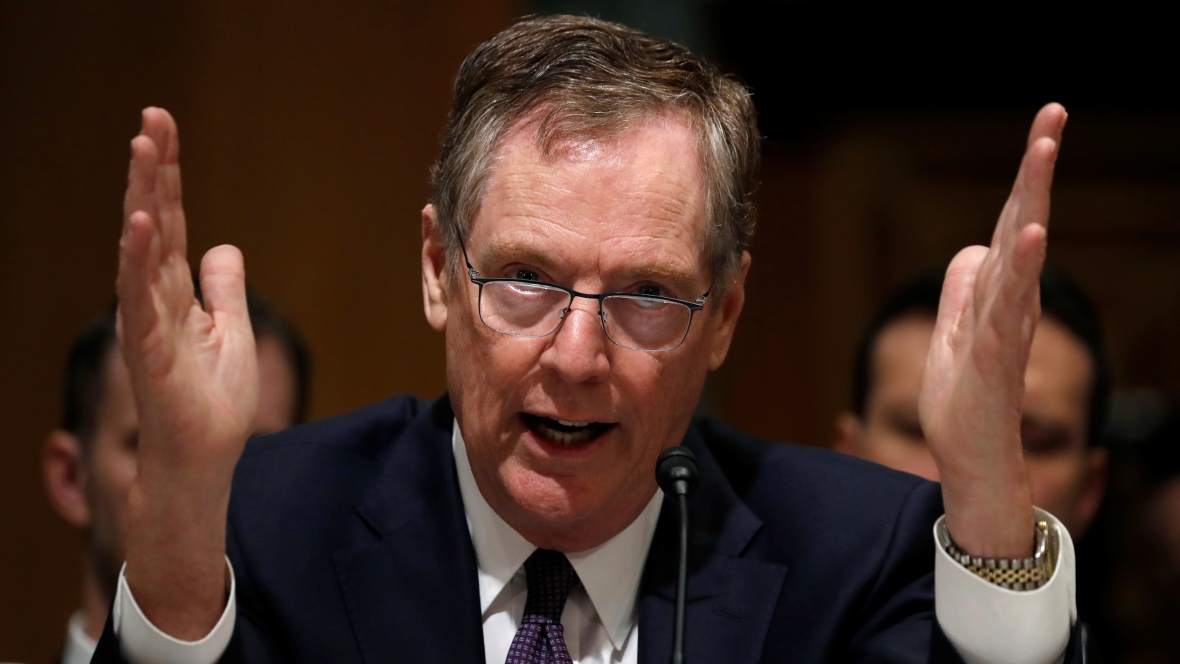 |
| US Trade Representative Robert Lighthizer this Thursday at the Senate Finance Committee (Kevin Lamarque - Reuters) |
Some of the United States’ closest trading partners will
receive a temporary reprieve from tariffs on aluminum and steel imports, the
top US trade official said Thursday, a day before the measures were set to
begin. The curbs were expected to be imposed on Friday (23rd March), two weeks
after Trump’s signature.
The decision was sure to relieve anxious U.S. partners,
even as it raised questions about whether the tariffs would be able to protect
US metal industries. Brazil, Argentina, the European Union, South Korea and
Australia are on the list US Trade Representative Robert Lighthizer announced
at a Senate hearing. Canada and Mexico already had been exempted.
World leaders had subjected Washington to a furious
lobbying effort to remove the tariff, announced by President Trump earlier this
month, warning of a trade war and saying that they did not see why
long-standing military allies should face the import taxes on national security
grounds, the professed basis for Trump’s action.
“The idea that the president has, is that based on a certain
set of criteria, that some countries should get out,” Lighthizer told the
Senate hearing. “What he has decided to do is to pause the imposition of the
tariffs with respect to those countries.”
Lighthizer said Wednesday that he expected that
negotiations about permanent exemptions to the tariffs would be resolved by the
end of April, creating pressure on the countries to reach a deal with
Washington on measures that would satisfy Trump’s desire to improve their trade
relationships with the United States.
Following the exemptions, the countries that will be hit
hardest when the steel tariffs take effect Friday will be Russia, Taiwan and
Turkey.
Temer:
US will start “negotiations” with Brazil
In an announcement made Wednesday (21st March), Brazilian
President Michel Temer said the US would start negotiations with Brazil over
the new import tariffs on steel and aluminum. While talking about the measure,
unveiled in a note by the US government just at that moment, Temer said the new
tariff will not be introduced before negotiations are brought to an end.
“I’m looking at a declaration by the White House saying
that Brazil is one of the countries with which negotiations are to begin with a
view to waiving import tariffs on steel and aluminum. The new tariffs, the
message from the White House says, will not apply until conversations are held
on the topic. Good news,” the Brazilian President said, during a meeting with
the Economic and Social Development Council (CDES).
On Tuesday, Temer talked to a representative from
Brazil’s steel-producing industry. In the conversation, the President availed
himself of arguments to convince US President Donald Trump to exempt Brazil
from the new tariff.
Sources: Agência Brasil, Reuters, The Washington Post
12 março, 2018

Brazilian Finance Minister Henrique Meirelles said that
the country is to consider talks with the US on the 25% tariffs on imported
steel, a measure signed Thursday (Mar. 8) by President Donald Trump.
“The Government signed that; it should be in effect in 15
days, but they’re saying they’re open to negotiation. We just have to know what
sort of negotiation this is; what they’re willing to negotiate. The issue will
be considered bearing in mind what Brazil has to win or lose,” Meirelles said
in New York, where he is taking part in an event aimed at drawing foreign
investment to Brazil.
In his view, the decision made by the US Government is
detrimental to all parties involved. “It benefits steel production and protects
the employment of a group of workers in steel-producing companies. But it’s
harmful, it takes the jobs of industrial companies using steel or aluminum;
companies that lower their international competitiveness for having more
expensive supplies.”
The Brazilian Government released a note last Thursday
(8) stating that the decision by the US Government should cause “significant losses”
in Brazil, and make an impact on “trade and investment ties between the two
nations.”
Altogether, 32% of the steel exported by Brazil is bound
for the US, which makes Brazil second only to Canada in steel exports to the
US. In 2017 alone, 4.7 million tons of Brazilian steel were shipped to the US,
which totaled $2.6 billion in revenues.
Trump's tariffs could ricochet on US coal country
Metallurgical coal — or “met coal” — is low-ash,
low-sulfur coal that’s used to produce coke, an essential fuel for steel-making.
Last week, Brazil reminded US officials that it’s the
biggest buyer of American met coal – about $1 billion worth last year – in a
statement expressing concerns over the tariffs.
Latin America’s largest economy imported nearly 5.2
million tons of US met coal through September of last year – about 1.3 million
more than the next highest consumer, Japan, according to the U.S. Energy
Information Administration.
The Brazilian statement also pointed out that US and
Brazilian steel industries are not competitors, but are integrated and
complement each other. “Approximately 80% of Brazilian steel exports are
semi-finished products that are used as inputs in the US steel industry. Moreover,
Brazil is the largest buyer of metallurgical coal from the United States,
chiefly for the manufacture of Brazilian steel for export to the United States”
said the note.
Brazil also said it would not rule out retaliating
against proposed tariffs. Similarly, a European Union trade leader has
threatened to impose tariffs on US made products like steel, cars, orange juice
and Kentucky bourbon.
Assinar:
Postagens (Atom)
Postagens populares
-
 Ministério cria projeto para estimular a participação política de mulheres O Ministério da Mulher, Família e Direitos Humanos publicou nest...
-
 Vídeo em poder da força-tarefa da Operação Lava Jato, exibido pelo Jornal da Globo, mostra uma reunião em que o então presidente do PSD...
-
 Hoje na Câmara dos Deputados: tramitação está na fase 13 Acompanhe ao vivo A comissão especial que analisa o projeto que estabe...
-
 Photo: Ueslei Marcelino/Reuters Brazil's government relaxed its budget targets until 2020 this Tuesday, delaying prospects for a d...
-
 Foto: Leonardo Berenger / Agência Berenger O ex-deputado e ex-governador do Rio de Janeiro Anthony Garotinho (PR) foi preso por volta ...


